
User interface development – more than just good looks
HMI development and simulation for complex industrial control systems
When developing control systems for complex machines, it is easy to focus on PLC programming, drive systems, and industrial communication. Equally important, however, is the user interface – the HMI part of the system the operator actually meets every day.
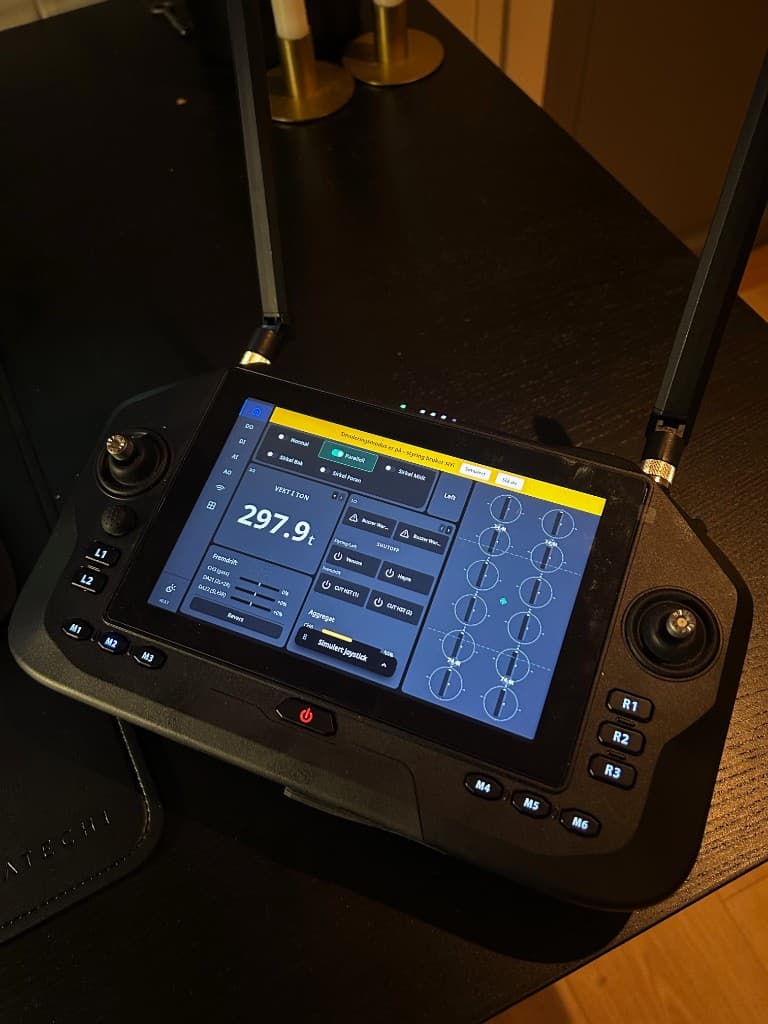
The photo shows the development of the user interface for our Heavylifter project at Eon AS. The trolley is located at the GOT yard on Andøya in Kristiansand, and through simulation we could develop and test functions, workflow, and operator experience from our development environment – in parallel with work on the machine itself.
By simulating the trolley's movements, sensors, and functions early in the project, we can verify that the control system behaves as the operator expects – before the solution is deployed on site. This reduces risk, saves time during commissioning, and delivers a better final solution for the customer.
A good user interface is not about advanced graphics or flashy animations. The goal is to give the operator the right information at the right time. When we develop HMI and control system solutions for industry, we emphasise clear presentation of critical information, intuitive navigation, easy access to alarms and troubleshooting, consistent design, good readability in demanding operating conditions – and above all, focus on safety and situational awareness.
In industrial environments, simplicity is often more important than complexity. The operator must quickly understand what is happening in the plant and which actions are available – whether in quarry, shipyard, healthcare, or other heavy industry.
For the Heavylifter project, the user interface was developed in parallel with the control system. Through simulation, we could test positions, sensors, control signals, and operator functions long before the system was fully installed. This approach makes it possible to identify improvements early, while the customer receives a solution that is better prepared at handover.
A modern control system is far more than just code. It is about combining automation, safety, user experience, and system understanding into one cohesive solution – where both technical robustness and usability must work in practice when the system is put into operation.
The Heavylifter project is a good example of how simulation and thoughtful user interface design can contribute to safer and more efficient commissioning – and how the right HMI design can be decisive for the operator, safety, and overall delivery quality.